
PATIENT INFORMATION
Allergic Rhinitis (Hay Fever)
Allergic rhinitis is an inflammatory response of the nasal lining to allergens; it is widely known as hay fever. It typically causes sneezing, itching in the nose, clear discharge and a blocked nose, often with itchy, watery eyes. This page explains what allergic rhinitis means, which pattern of symptoms suggests allergy, when allergy assessment is worthwhile and the general principles of treatment.
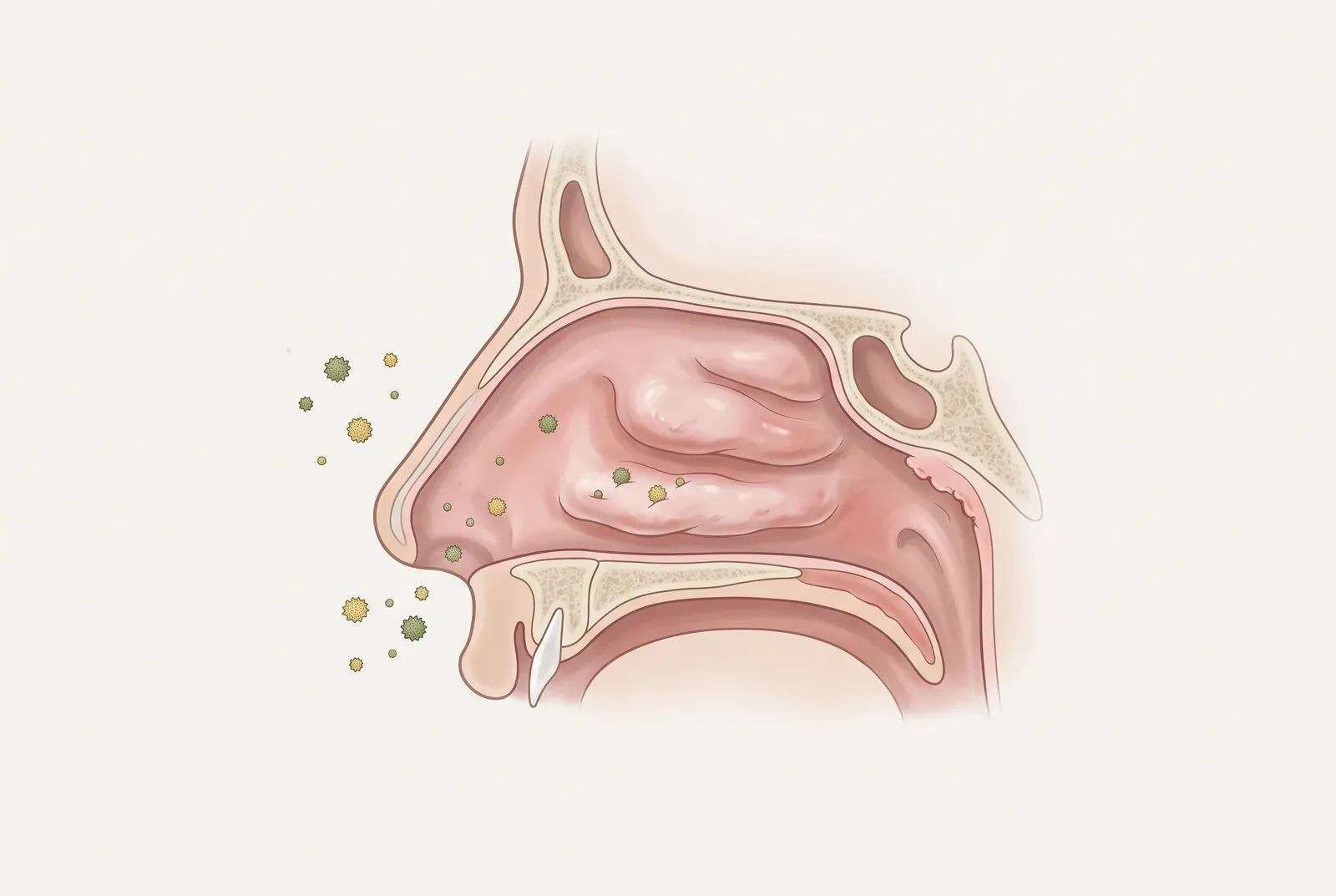
What is allergic rhinitis?
Allergic rhinitis arises when the immune system reacts excessively to substances that are normally harmless, such as pollen, house dust mite, mould or animal allergens. After contact with the allergen an inflammatory process begins in the nasal lining: the lining swells, secretion increases, and stimulation of the nerve endings produces sneezing and itching.
Symptoms may cluster in particular parts of the year (seasonal, usually related to pollen) or continue throughout it (perennial, usually related to house dust mite and animal allergens). Guidelines also classify the condition by how long symptoms last and how much they affect daily life; that classification guides how intensive treatment needs to be.
Allergic rhinitis is not only a nasal problem. It can occur together with asthma, allergic conjunctivitis and atopic skin findings, because inflammation of the upper and lower airways is frequently part of the same process. Accompanying complaints are therefore explored during assessment.
The symptom pattern that suggests allergy
What suggests allergic rhinitis is not one symptom but a combination of them:
- Sneezing in bursts, one sneeze after another
- Itching in the nose, the palate or the eyes
- Clear, watery nasal discharge
- A blocked or stuffy nose on both sides that varies during the day
- Red, watery, itchy eyes
- Symptoms that become obvious after a particular environment, season or contact
Presentations dominated by fever, muscle aches and sore throat that settle within a few days suggest a viral upper respiratory infection instead. Presentations dominated by thick, coloured discharge and facial pressure that last more than ten days are assessed separately as rhinosinusitis. Non-allergic forms of rhinitis can also produce similar complaints; that distinction is made from the history and the examination.
What is done in the ENT assessment?
The assessment begins with a detailed history: when the symptoms began, how long they last, whether they are seasonal or perennial, which environments trigger them, whether there are animals at home, a family history of allergy, accompanying asthma and eye complaints, the medicines used and the benefit obtained from them.
During the examination the inside of the nose is inspected with a light; the colour and swelling of the lining, the state of the turbinates, the nature of the discharge and the position of the septum are assessed. Where needed, nasal endoscopy with a thin optical instrument is performed; this helps to distinguish polyps, structural narrowing or findings in the nasopharynx.
Allergy tests are not required routinely for every patient. Guidelines recommend skin prick testing or measurement of allergen-specific IgE in blood when the history and examination suggest an allergic background and when the result would change the treatment plan. The purpose of testing is to identify the allergen that may be responsible and to build avoidance and treatment around it.
How is the treatment approach decided?
Treatment is planned according to the severity and duration of symptoms, how much they affect daily life, and the allergen identified. The approach falls into three areas.
Allergen avoidance: environmental measures directed at the identified allergen (bedroom measures for house dust mite, adjusting outdoor and ventilation habits during the pollen season, reducing contact where there is animal allergy) are an integral part of treatment. Avoidance alone is not always sufficient, but it can reduce the need for medicines.
Medical treatment: for allergic rhinitis that affects quality of life, guidelines highlight intranasal corticosteroid treatment; where sneezing and itching predominate, second-generation (less sedating) oral antihistamines are recommended. Intranasal antihistamines and their fixed combinations with intranasal corticosteroids are further options in the guidelines, and the current ARIA/EAACI review indicates that combined intranasal treatment may be more effective than either component alone. Prolonged use of decongestant sprays is avoided. This page deliberately contains no drug names, doses or treatment durations; the choice and the duration are decided by the physician.
Allergen immunotherapy: in carefully selected patients this is a treatment lasting years that aims to build immune tolerance to an identified allergen. Whether it is appropriate depends on the allergen having been identified, the severity of symptoms, the benefit obtained from medical treatment and any accompanying conditions, and it is conducted together with the relevant specialties.
Where structural causes such as septal deviation or turbinate enlargement accompany allergic rhinitis, the plan takes both components into account. The full range of causes of nasal obstruction is covered on a separate page.
When is a closer assessment needed?
Allergic rhinitis is not an emergency. Some findings, however, suggest that the picture may not be explained by allergy alone and call for the assessment to be brought forward:
- Persistent obstruction or discharge on one side only
- Blood in the discharge, or recurrent nosebleeds
- A marked reduction in, or loss of, the sense of smell
- Persistent facial pain and pressure, or a picture lasting more than ten days and worsening
- Complaints that continue despite appropriate treatment and disturb sleep and daily life
- Shortness of breath, wheeze or cough accompanying the allergic complaints
None of these findings on its own indicates a particular diagnosis; because they change the range of possible causes, however, assessment should not be postponed.
Frequently asked questions
How do I tell allergic rhinitis from a cold?
The distinction is made by examination, but some clues help: in allergic rhinitis itching and repeated bursts of sneezing predominate, the discharge is clear, and complaints may last for weeks in connection with a particular environment or season. A viral cold usually settles within a few days and is more often accompanied by sore throat, tiredness and fever.
Do I have to have allergy testing?
No. Allergy tests are not requested routinely for every patient. They are meaningful when the history and examination suggest an allergic background and when the result would change the treatment plan, for example to define avoidance measures or to consider immunotherapy. The decision is made with the physician.
Does allergic rhinitis go away completely?
For most people it is an ongoing condition in which symptoms may lessen or increase over time. The aim is to control the symptoms and reduce their effect on daily life. A promise of permanent cure would not be medically accurate; immunotherapy can give long-term benefit in carefully selected patients, but it is not suitable for everyone.
Can allergic rhinitis lead to sinusitis or asthma?
Uncontrolled allergic rhinitis sustains inflammation in the nasal lining and can affect the ventilation of the sinuses and the middle ear; allergic rhinitis and asthma also frequently occur together. This does not mean that every person with allergic rhinitis will develop these conditions, which is why accompanying complaints are assessed.