
PATIENT INFORMATION
Tinnitus (Ringing in the Ears)
Tinnitus is the perception of a ringing, buzzing, humming or similar sound in the ear or head when no external source of sound is present. It is a common complaint and is usually related to a change in the hearing system; in most cases it is not a sign of a serious disease. This page explains what tinnitus means, which forms need closer assessment, what is done in the ENT examination and hearing test, and the principles of management.
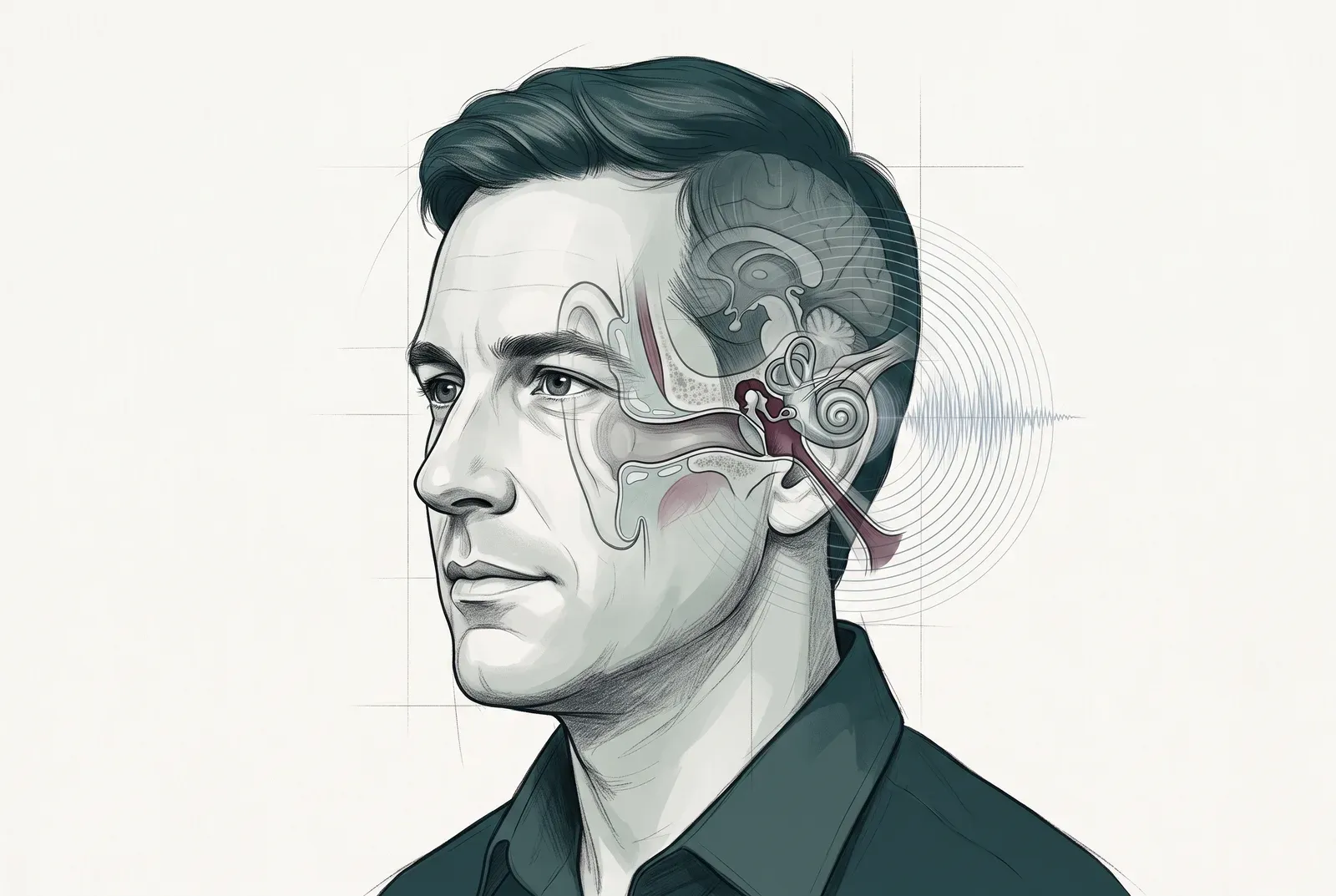
What is tinnitus?
Tinnitus is a sound perceived without any sound coming from the outside. People may describe it as ringing, humming, buzzing, whistling or clicking; the sound may be continuous or intermittent and may affect one or both ears. Tinnitus is a perception specific to the individual and cannot be heard by others; only rarely are there forms in which a sound arising from a blood vessel or muscle near the ear can also be heard from outside.
Tinnitus is a symptom, not the name of a disease. The condition it most often accompanies is hearing loss: at the frequencies where sound perception in the inner ear is reduced, the hearing system’s own activity may be perceived as tinnitus. Noise exposure, age-related changes in hearing, an earwax plug or middle-ear problems, some medicines, problems of the jaw joint and neck muscles, and stress and sleep disturbance can start tinnitus or make it more noticeable.
Clinically important distinctions
Several distinctions guide the assessment:
- Duration: Tinnitus lasting less than six months is regarded as recent in onset and tinnitus lasting longer as persistent; guidelines use this distinction in planning management.
- Side: Two-sided tinnitus is more often related to general changes in hearing; in one-sided tinnitus, causes involving the hearing nerve and the inner ear are investigated more closely.
- Character: A continuous, tonal sound and a sound that beats in time with the pulse suggest different causes; pulsatile tinnitus calls for the assessment of vascular causes.
- Impact: How much the tinnitus affects sleep, concentration and daily life is one of the most important determinants of the management plan; bothersome tinnitus and tinnitus that is noticed but not distressing require different approaches.
What is done in the ENT assessment?
The assessment begins with a detailed history: the onset, character and side of the tinnitus, whether it is continuous or intermittent, accompanying changes in hearing, fullness in the ear, dizziness, noise exposure, medicines being taken, sleep and general health.
During the examination the ear canal and eardrum are inspected with an otoscope; correctable causes such as an earwax plug, fluid in the middle ear or eardrum problems may be seen at this stage. Examination of the head and neck and, where needed, of the jaw joint and neck is also carried out according to the presentation.
A hearing test (audiometry) is the basic investigation in the assessment of tinnitus; guidelines recommend a hearing test in tinnitus that is one-sided, persistent or accompanied by a hearing complaint. When one-sided tinnitus, hearing loss that is one-sided or differs between the two ears, or pulsatile tinnitus is found, imaging may be considered to assess the pathway of the hearing nerve and the blood vessels. Guidelines do not recommend routine imaging in the absence of these features.
Management and treatment approaches
There is no single treatment for tinnitus; the approach is determined by the cause identified and by how much the tinnitus affects the person. When a correctable cause is found (for example an earwax plug or fluid in the middle ear), treating that cause comes first.
Information and counselling about what tinnitus is and how it can be managed are the foundation of management. Where clinically relevant hearing loss is present, hearing-aid assessment is appropriate; guidelines treat this situation as a reason to consider it. For the distress caused by persistent, bothersome tinnitus, cognitive behavioural therapy and other guideline-supported tinnitus-related psychological approaches may help. Sound-enrichment or sound-therapy approaches may be considered in selected management plans, but the recommendations and evidence for them are less uniform and do not carry the same recommendation strength as cognitive behavioural therapy (the NICE guideline states that the evidence was insufficient to make a practice recommendation on sound therapy).
Guidelines do not recommend the routine use of medicines, dietary supplements or herbal products for the purpose of relieving tinnitus itself; there is insufficient evidence that these products improve tinnitus. Addressing accompanying conditions such as sleep disturbance, anxiety and low mood, on the other hand, plays an important part in reducing the impact of tinnitus.
In many people tinnitus becomes less noticeable over time. This does not mean it always disappears completely; the aim of management is to reduce the effect of tinnitus on daily life. This page deliberately contains no drug names or doses.
Frequently asked questions
Is tinnitus a sign of a dangerous disease?
Usually not; tinnitus is most often related to changes in hearing. Features such as one-sided tinnitus, pulsatile tinnitus and tinnitus accompanied by a sudden reduction in hearing, however, require the assessment to be brought forward so that the underlying cause can be investigated.
Does tinnitus go away completely?
When a correctable cause is found, the tinnitus may resolve entirely. In other cases most people notice the tinnitus less over time, and the aim of the treatment approaches is to reduce its impact. A promise of a permanent cure would not be medically accurate.
Should I take medicines or supplements for tinnitus?
Guidelines do not recommend the routine use of medicines, dietary supplements or herbal products for tinnitus itself; a benefit from these products has not been shown. Treatment of accompanying conditions such as sleep disturbance or anxiety can be planned following a physician’s assessment.
Is an MRI scan needed for every case of tinnitus?
No. Imaging is considered when findings such as one-sided tinnitus, hearing loss that differs between the two ears, pulsatile tinnitus or accompanying nervous-system symptoms are present. Routine imaging is not recommended in the absence of these features.