
PATIENT INFORMATION
Postnasal Drip
Postnasal drip is the sensation of secretions from the nose and sinuses running down into the throat; it may occur together with a need to clear the throat, a feeling of something stuck in the throat and a cough that is worse at night. It is not the name of a disease but a symptom shared by several different causes. This page explains what postnasal drip is, which conditions of the nose and sinuses can produce it, what is done in the ENT assessment and the general principles of management.
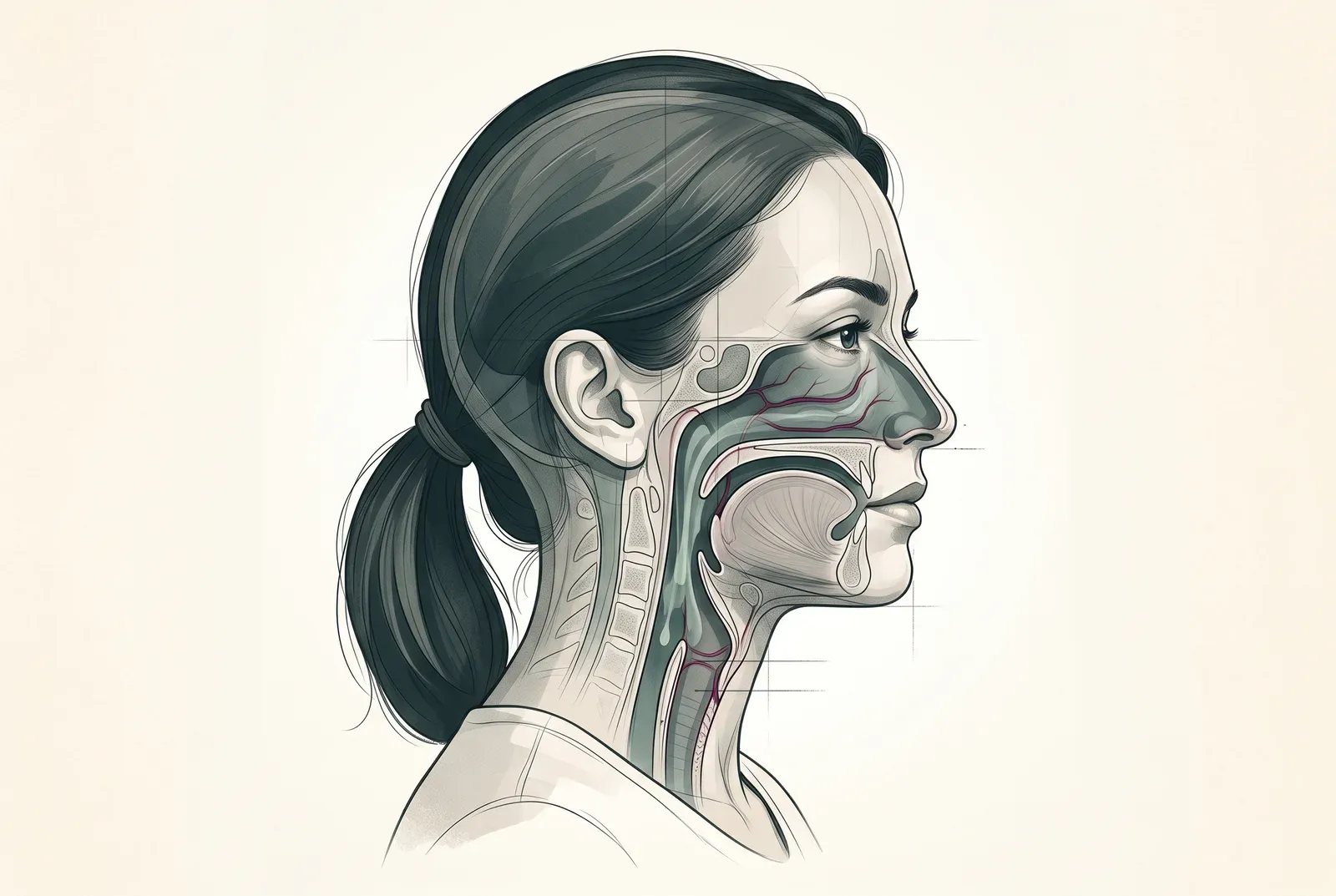
What is postnasal drip?
The lining of the nose and sinuses produces a considerable amount of secretion every day. This secretion is moved by tiny hairs in the lining towards the back of the nose and from there into the throat, where it is usually swallowed unnoticed. If the amount increases, the secretion becomes thicker or the throat becomes more sensitive, this natural flow becomes noticeable; that is the complaint described as postnasal drip.
Frequently accompanying symptoms are a constant need to clear the throat, a feeling of something stuck or sticky in the throat, throat discomfort that is worse in the morning, a cough that increases on lying down and mild hoarseness. These symptoms do not by themselves show which cause is involved.
A symptom or a diagnosis?
Postnasal drip is not the name of a single disease; it is a symptom. In the guidelines, the nasal and sinus causes of prolonged cough are grouped under the heading “upper airway cough syndrome”; this term emphasises that postnasal drip is a manifestation of an underlying nasal or sinus condition rather than a diagnosis in its own right.
The aim of assessment is therefore not to stop at the label “postnasal drip” but to identify the mechanism producing it. Different causes may lie behind the same complaint, and sometimes more than one cause is present at the same time.
What are the common causes?
The main nasal and sinus causes that can produce postnasal drip are:
- Allergic rhinitis: Inflammation of the nasal lining after contact with allergens; it may produce postnasal drip together with sneezing, itching, clear discharge and obstruction.
- Non-allergic rhinitis: A reaction of the lining triggered by temperature changes, dry air, odours, some medicines or hormonal factors; the drip may persist even when allergy tests are negative.
- Acute and chronic rhinosinusitis: In sinus inflammation, discharge that becomes thicker and may change colour often runs towards the throat; obstruction, facial pressure and a reduced sense of smell may accompany it.
- Upper respiratory infections: A temporary drip that settles within days in the common cold and similar illnesses.
- Structural factors: Causes such as septal deviation and turbinate enlargement can alter the flow of secretions and make the complaint more noticeable.
- Environmental and habit-related factors: Tobacco smoke, dry and dusty environments and the inappropriate use of some nasal sprays can affect the lining.
The feeling of something stuck in the throat and the need to clear it are not always nasal in origin. Backflow of stomach contents into the larynx and throat (laryngopharyngeal reflux), tension in the throat muscles and some throat conditions can produce similar complaints. One purpose of assessment is to make this distinction.
What is done in the ENT assessment?
The assessment begins with a detailed history: the duration of the complaint, its variation during the day and across seasons, the nature of the discharge, accompanying obstruction, sneezing, changes in the sense of smell, cough and voice changes, complaints suggesting reflux, smoking and environmental factors, and the medicines being used.
During the examination the inside of the nose is inspected with a light; where needed, nasal endoscopy allows the back of the nose, the sinus openings and the nasopharynx to be seen directly. Examination of the throat and larynx helps to distinguish throat-related causes of the complaint.
If the history suggests an allergic background, allergy assessment may be considered. Imaging is not routinely required; CT may be considered in presentations suggesting chronic rhinosinusitis that do not respond to medical treatment, or in unusual findings.
Treatment and management approaches
Treatment is directed at the cause identified; there is no single “postnasal drip treatment”.
In allergic and non-allergic rhinitis, the basis of treatment is intranasal treatment and avoidance of triggers; saline nasal irrigation is used as a supportive measure in many presentations. When rhinosinusitis is found, treatment is planned for that condition. Reflux is considered as a possible contributing factor when the history and examination findings point that way; throat clearing, cough, morning symptoms or a feeling of something stuck in the throat do not by themselves diagnose reflux, and any reflux-directed treatment is raised by the physician only after appropriate clinical assessment.
Managing environmental factors, keeping room humidity at an appropriate level and avoiding tobacco smoke can help to reduce the complaint whatever the cause. Avoiding long-term use of decongestant sprays is important.
This page deliberately contains no drug names, doses or treatment durations; treatment is planned individually by the physician.
When is earlier assessment needed?
Postnasal drip is usually not an emergency. Some findings, however, require the assessment to be brought forward and the nose and nasopharynx to be inspected directly:
- Persistent one-sided discharge or persistent obstruction on one side
- Blood in the discharge, or recurrent nosebleeds
- A persistent bad smell
- A newly noticed swelling in the neck
- Hoarseness lasting longer than three weeks, or difficulty swallowing
- Sinusitis symptoms accompanied by swelling around the eye, visual change or severe headache
None of these findings on its own indicates a particular diagnosis; because they change the range of possible causes, however, assessment should not be postponed.
Frequently asked questions
Does postnasal drip mean sinusitis?
No. Sinusitis is only one of the causes of postnasal drip. Allergic and non-allergic rhinitis, temporary infections and non-nasal causes such as reflux can produce the same complaint. The cause involved is determined by the history and examination.
Can postnasal drip cause a cough?
Yes, it can. Secretions running into the throat can stimulate the cough reflex; a cough that increases on lying down in particular may be related to it. Prolonged cough has other causes too, such as asthma and reflux; assessment of a cough lasting longer than eight weeks covers these causes as well.
Should I have an allergy test?
Allergy tests are not requested routinely for every complaint of postnasal drip. They are meaningful when the history and examination findings suggest an allergic background, and they are recommended by the physician when the result could change the treatment plan.